PhD Researcher & AI Engineer

Eduardo Aguilar-Bejarano

Computational Chemistry  ·  University of Nottingham

specialization = “

Developing Graph Neural Networks and Explainable AI to advance catalyst design, materials discovery, and molecular representation in the chemical sciences.

researcher.py
# AI Researcher in Computational Chemistry

researcher = {
"name": "Eduardo Aguilar-Bejarano", "role": "PhD Researcher & PostDoc", "institution": "University of Nottingham", "research": [ "Graph Neural Networks", "Explainable AI (XAI)", "Asymmetric Catalysis", "Materials Science", ], "tools": ["PyTorch", "RDKit", "PyG"], "publications": 5, "open_source": True, }

Research Interests

Bridging artificial intelligence and the chemical sciences through graph-based representations and explainable models.
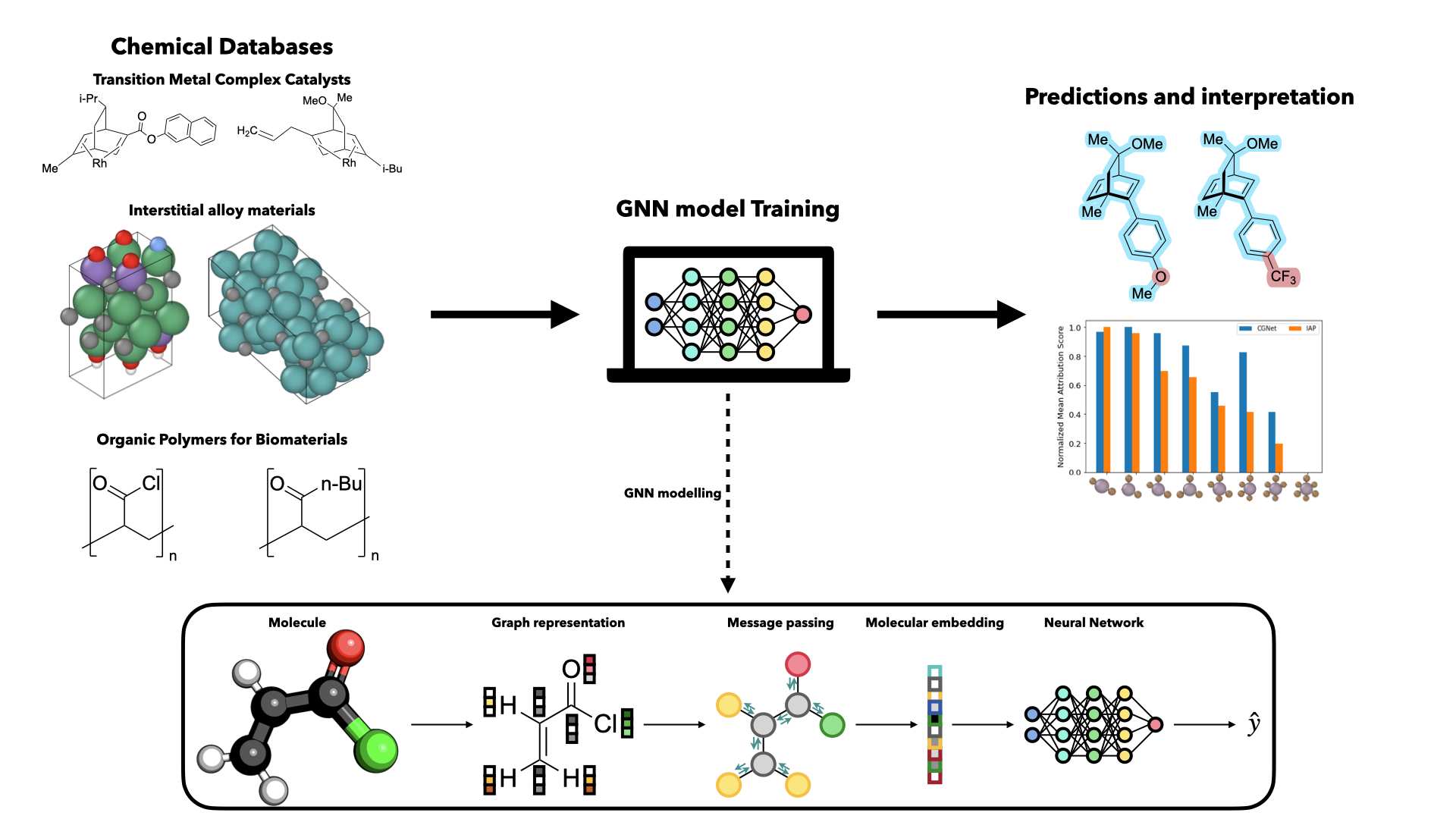
Research Interests Overview

My research revolves around Graph Neural Networks (GNNs) and their application to cutting-edge problems in Chemical and Materials Sciences. I am driven by the challenge of representing molecules and materials accurately in computational systems — particularly inorganic compounds, where traditional representations such as SMILES are incompatible. A central question guiding my work: How can we represent molecules more accurately to enable higher predictive power and model interpretability?

Skills & Tech Stack

Tools and technologies I use to build AI solutions for the chemical sciences.

Machine Learning & AI
PyTorch
PyTorch Geometric
scikit-learn
XGBoost
Explainable AI (XAI)
Weights & Biases
Ray Tune
Cheminformatics
RDKit
ASE
SMILES / InChI
Graph Representations
Molecular Modelling
Programming
Python
Bash
Pandas / NumPy
Matplotlib / Plotly
Streamlit
Dev & Infrastructure
Git / GitHub
Docker
HPC / SLURM
Linux
GPU Acceleration

Career & Education

My academic and professional journey.

2018 – 2022

BSc Chemistry with Honors

Universidad de Costa Rica

GPA 9.23/10. Graduated with honors, developing a strong foundation in analytical and physical chemistry.

2021 – 2022

Research Assistant

Universidad de Costa Rica

Developed cheminformatic models to predict bioactive molecule profiles and isomerization constants.

2022 – Present

PhD Researcher — Chemistry & AI

University of Nottingham, AI DTC

Researching GNN models for catalyst optimisation and materials property prediction under Prof. Woodward, Dr. Figueredo, and Prof. Özcan.

Nov 2024 – Present

Post-Doctoral Researcher

University of Nottingham — EPSRC Large Grant

Building ML models for polymer biomaterials, leading development of PolyNet and co-developing Helix for reproducible ML research.

Research Topics

Focused areas where I develop and apply graph-based AI methods.

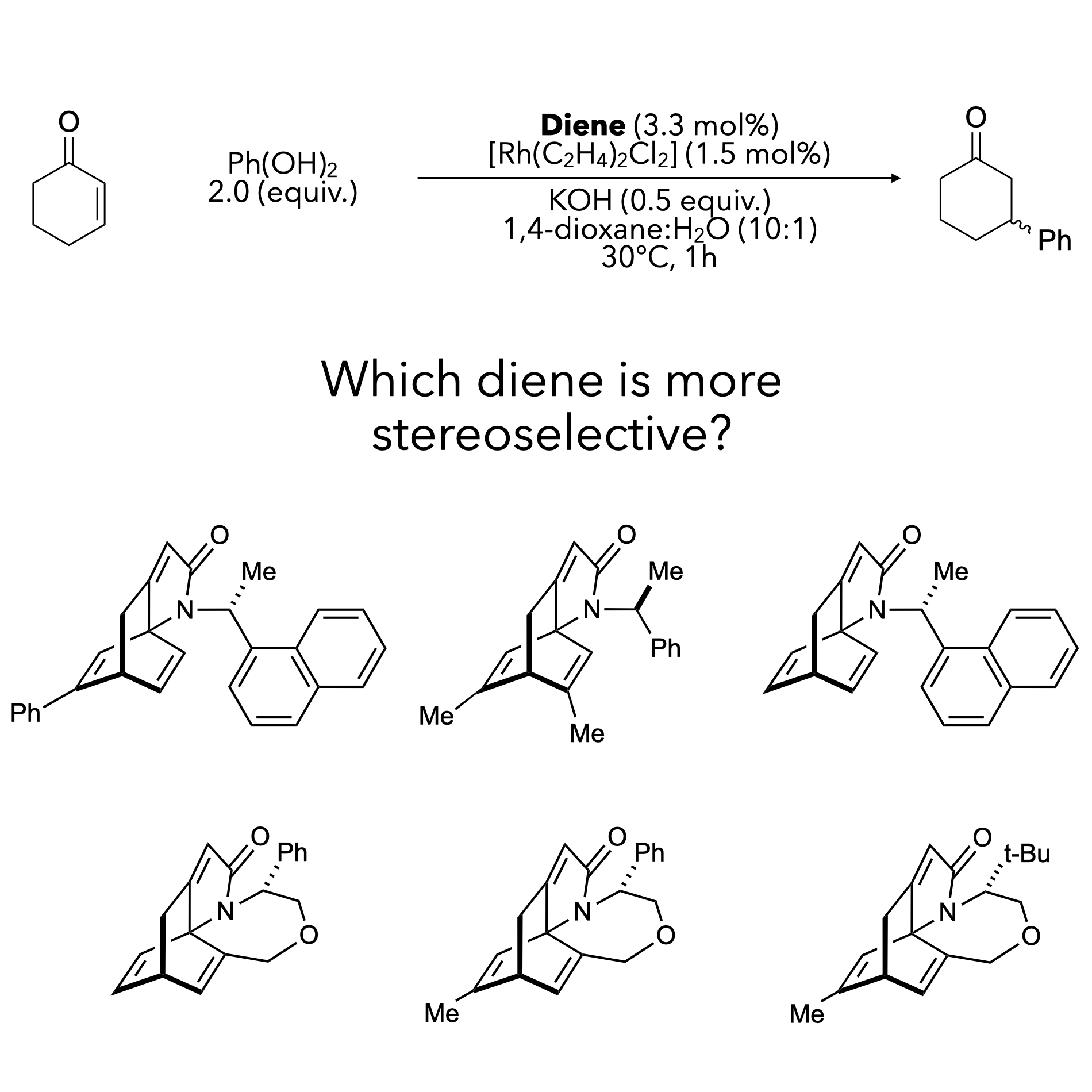
Data-Driven Ligand Optimization
Data-Driven Ligand Optimization

Cheminformatics
Asymmetric Catalysis
Python
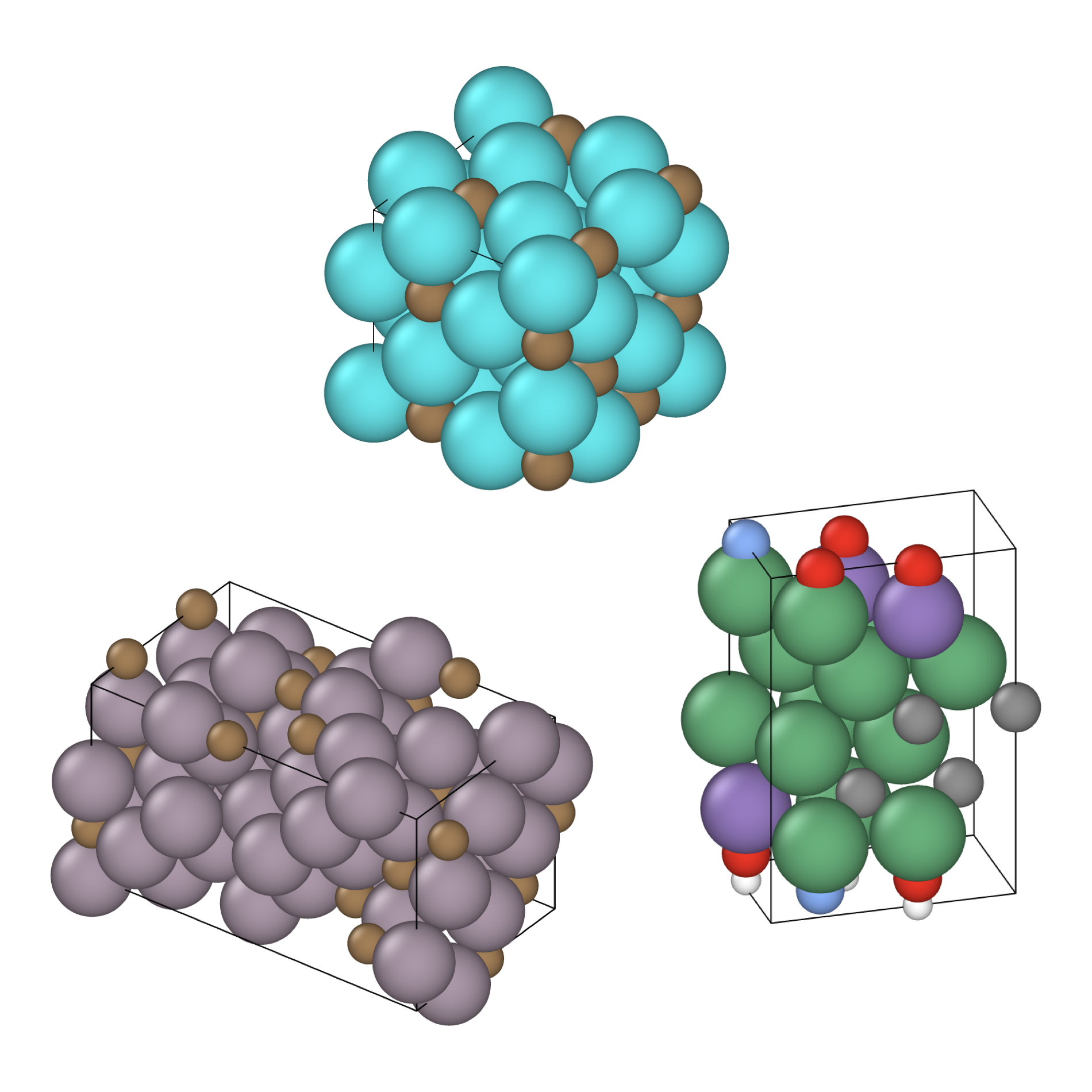
Explainable Deep Learning for Interstitial-Alloys

Explainable Deep Learning for Interstitial-Alloys

Materials Science
Deep Learning
XAI

Ongoing Projects

Current research directions and collaborative work.

GNNs-Driven Biopolymers Design

PyTorch GNNs

Working with the EPSRC Large Grant, specialising in GNNs and explainability methods for novel polymer biomaterial discovery.

GNN-Guided Small Molecule Design

Generative AI Chemistry

Exploring GNNs and XAI methods for generating novel small molecules with targeted physicochemical properties.

ML Prediction Error Quantification

Uncertainty Validation

Developing metrics to quantify prediction accuracy based on molecular structure relationships in training data.

Open-Source Projects

Publicly available tools and frameworks developed during my research.

AsymBench

A modular benchmarking framework for systematically evaluating ML approaches in predicting asymmetric reaction outcomes — covering fingerprints, descriptors, graph representations, and GNNs.

GNNs XAI Cheminformatics

PolyNet

A Python library for polymer property prediction using six GNN architectures (GCN, GAT, MPNN, GraphSAGE, …) with automatic hyperparameter optimisation and atom-level explainability.

PyTorch Geometric Materials Science

LipidLNPQuantification

Neural network calibration framework for quantifying lipid composition in nanoparticle mixtures from mass spectrometry data, with softmax-constrained output and Integrated Gradients attribution.

PyTorch Analytical Chemistry

Get in Touch

If you'd like to collaborate, discuss my research, or explore opportunities — feel free to reach out.

eduardo.aguilar-bejarano@nottingham.ac.uk