About Me
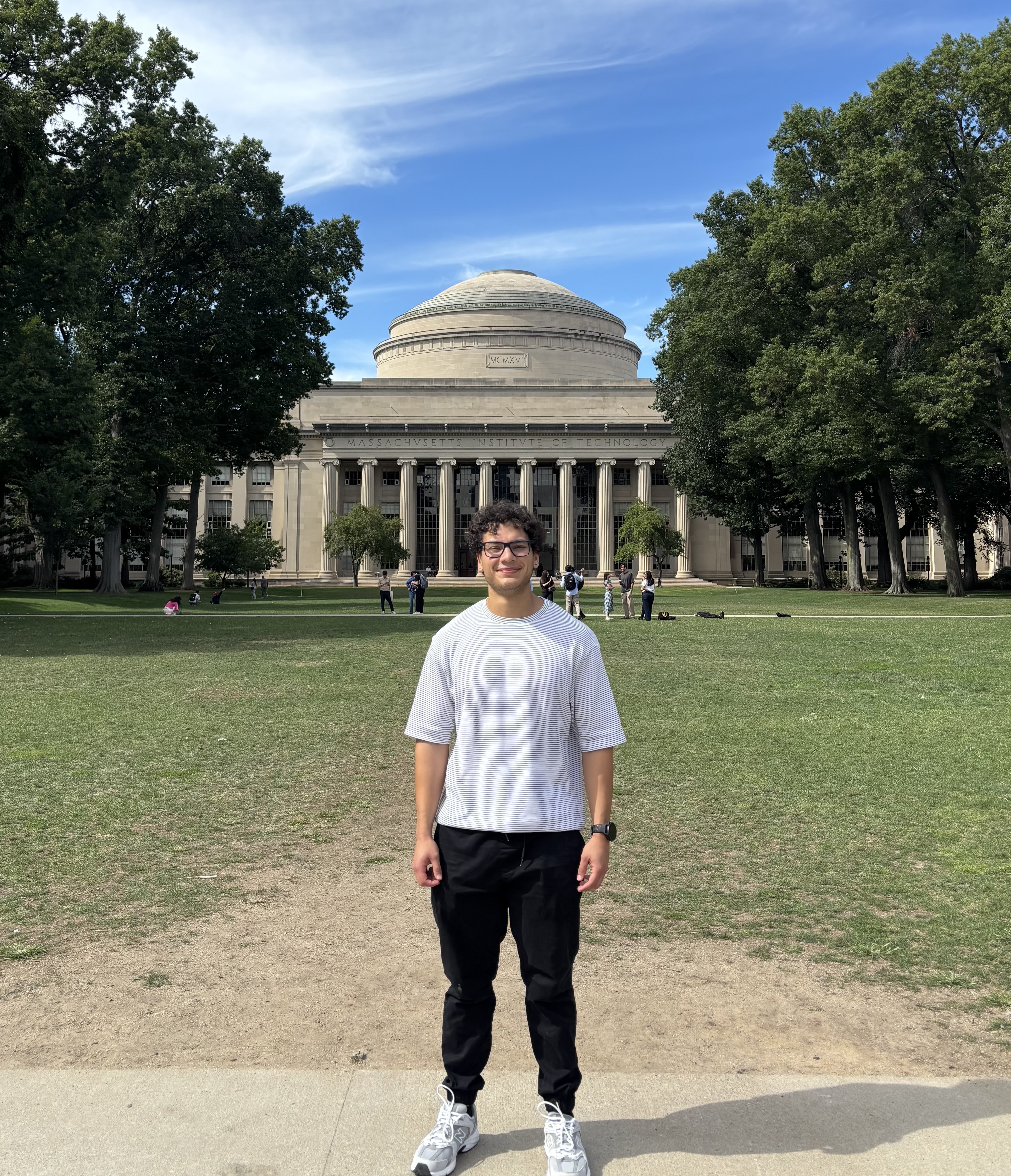
Hello! I'm Eduardo Aguilar-Bejarano, a researcher specialised in data-driven and machine learning solutions for fundamental scientific and engineering problems across chemistry and materials science. I am very passionate about combining my knowledge of fundamental science disciplines, such as biology and physical-organic chemistry, with AI technologies to solve complex scientific challenges. The tools I currently use include deep learning and generative models, which I am keen to apply across different (and rather diverse) disciplines, including but not limited to catalyst design and nanomedicine.
My academic journey began at the Universidad de Costa Rica, where I earned my Bachelor's degree in Chemistry with Honors (GPA 9.23/10). I then joined the AI Doctoral Training Centre at the University of Nottingham to pursue my PhD in Chemistry.
My PhD research focused on the use of graph representations for modelling chemical systems such as transition-metal complexes for asymmetric catalysis, solid-state materials (specifically interstitial alloys), and soft materials (polymers). I also worked on the development of explainable AI tools for deep learning models, allowing elucidation of structure–property relationships. The thread running through my work is the chemical representation problem — how molecules, materials, and reactions should be encoded for learning. I worked under the supervision of great mentors: Prof. Simon Woodward, Prof. Ender Özcan, and Dr. Grazziela Figueredo.
From June to August 2026 I had the incredible opportunity to work as a visiting researcher in the Anderson Lab at MIT (Koch Institute). This visit really shaped my view of how AI engineers (like myself) should approach a modelling problem to make a real-world impact. Ever since, I approach scientific problems with the ultimate goal of creating something valuable for the scientific community (and hopefully humanity too!). In September 2026 I successfully defended my PhD.
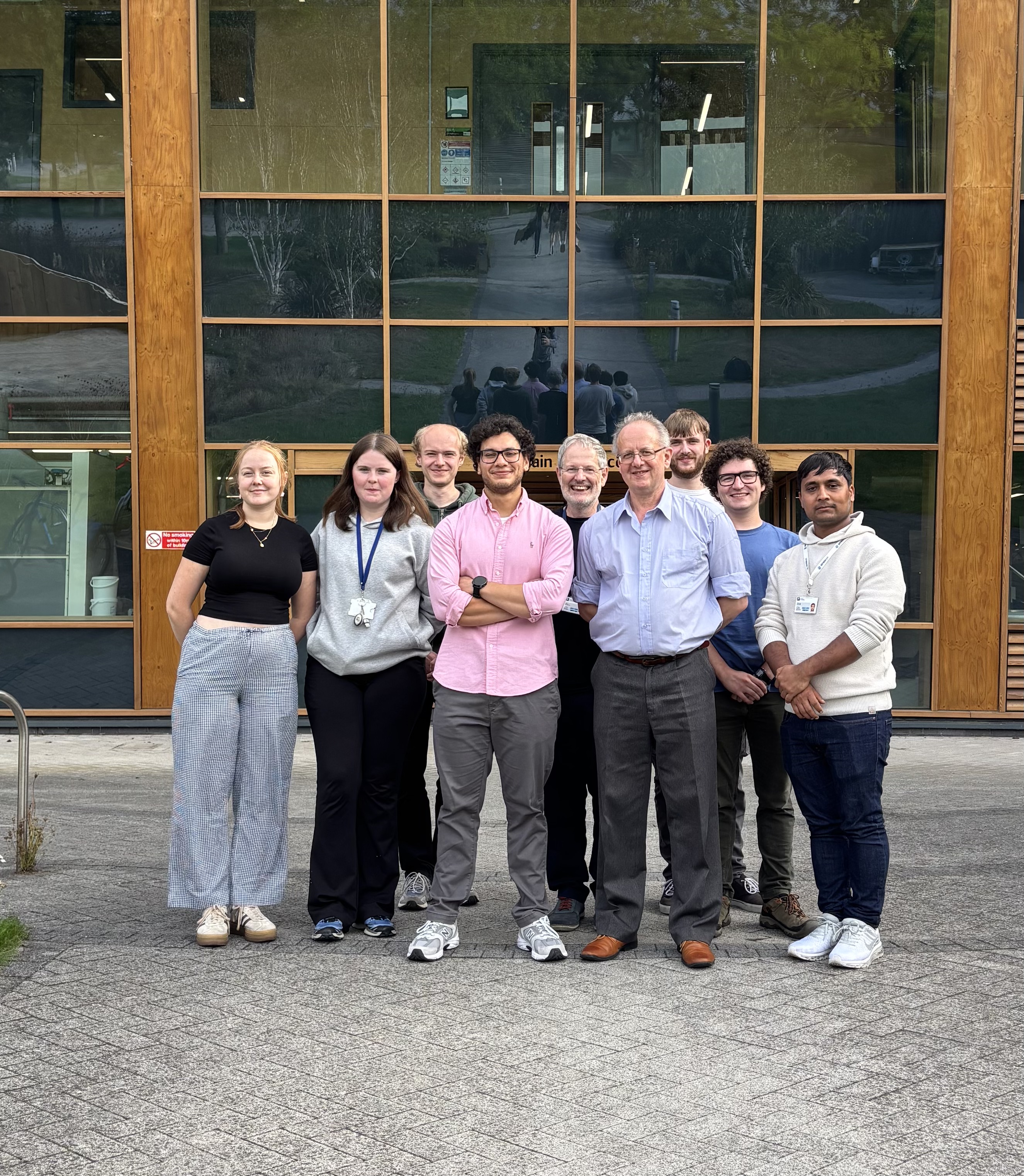
After my PhD, I find myself figuring out the next step in my career. I am still interested in doing research and making a real-world impact through AI and ML technologies. My current research interests span both fundamental science problems and technology-application problems. For instance, I am interested in developing more efficient catalysts for challenging transformations, and in designing better materials for drug delivery. On top of design questions, I am also excited about research that helps us understand, mechanistically, why a certain molecule (i.e. a catalyst or drug vehicle) is particularly good (or bad) for an application. I strongly believe that data — analysed through AI or ML — can give clues about these mechanisms of action, which can then be used for the rational design of new molecules. I am keen to develop and apply technologies that speed up discovery and enable more efficient use of resources, minimising the environmental impact of research. Importantly, I see AI and ML as the vehicle, but the fundamental science and engineering as the end goal.
Outside of research, I enjoy training, especially CrossFit and running! I also enjoy listening to and playing music. Feel free to connect on LinkedIn!
Education
PhD in Chemistry & AI
University of Nottingham, AI Doctoral Training Centre (EPSRC)
Full 4-year scholarship. Thesis on interpretable GNNs for structure–activity relationship discovery. Supervisors: Prof. Simon Woodward, Prof. Ender Özcan, Dr. Grazziela Figueredo.
BSc Chemistry with Honors
Universidad de Costa Rica
GPA: 9.23/10. Graduated with honors in chemistry.
Special courses: advanced topics in organic molecule spectroscopy, bioinorganic chemistry, biochemistry, cancer biology, cheminformatics, and organic synthesis.